Backyard Baseball '97
- 3.5
- Rating
- 10.00K
- Installs
- $4.99
- Price

 Analysis by App-foxy
I approached Backyard Baseball '97 as both a sports game and a return to a very particular kind of baseball: simple, characterful, and built around the pleasure of putting together a neighborhood team. Playground Productions LLC brings back the original 1997 experience for modern players, but the important question is not only whether the old charm survives. It is also whether this version feels comfortable to read, navigate, and play in different everyday situations.
My overall impression is positive but specific. This is best understood as a compact retro sports game rather than a modern baseball simulation. It asks less of the player in terms of rules and long-term management, yet it still expects attention during play. That makes it appealing for someone who wants a relaxed throwback session, while people looking for deep customization, contemporary presentation, or extensive accessibility options may find it limited.
How the classic presentation affects readability and navigation
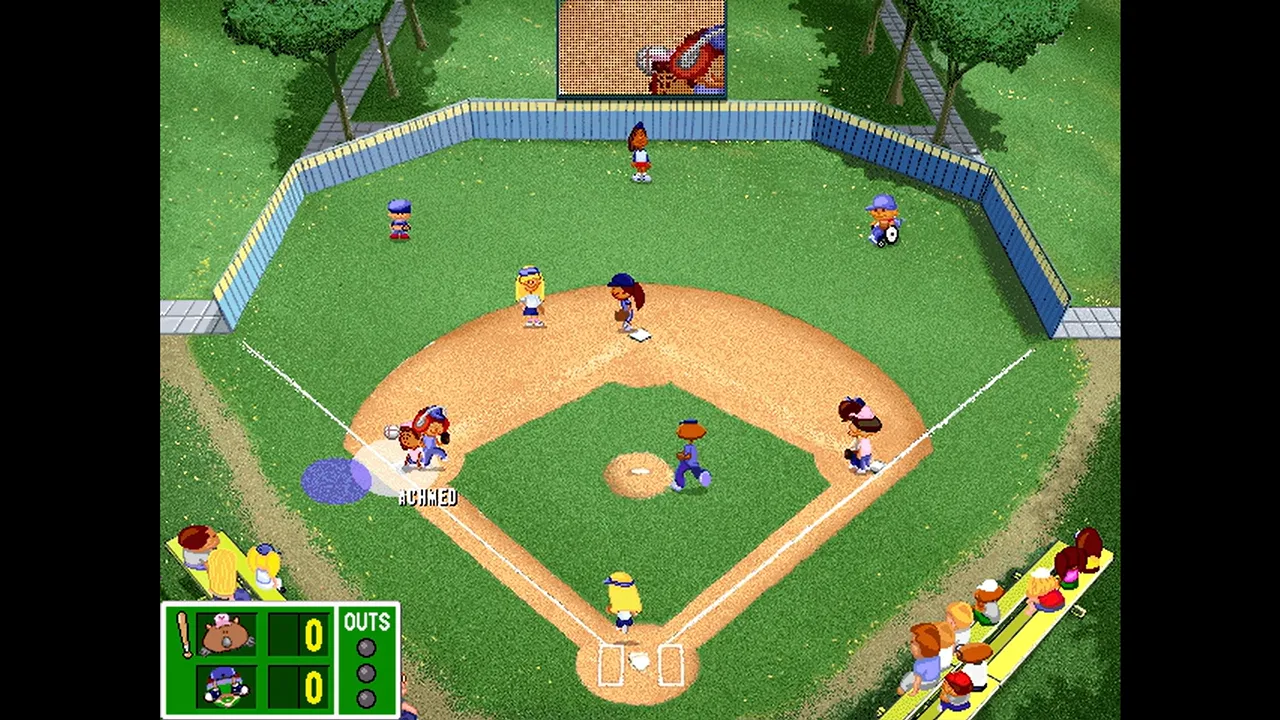
The strongest part of the experience is its clear identity. The game’s visual language belongs to an earlier era, and that gives it a warmth that many current sports games lack. Instead of surrounding the player with layers of menus, live-service prompts, and competitive systems, the focus stays on getting into a baseball game and enjoying the personalities around it.
You May Also Like

 Blood Strike: 2.5 Anniversary
Blood Strike’s Loadouts Turn Every Drop Into a Tactical Gamble
A close look at Blood Strike’s custom loadouts: how fast access to signature weapons reshapes its battle royale rhythm, rewards preparation, and narrows the gap between fights.

 Pandora - Music & Podcasts
Pandora’s Music Is Easy to Start, but Harder to Recover
Pandora’s strength is its low-effort path from a seed to a station. Its weak spot is how much confidence it asks you to place in connection, setup, and quiet recovery.

 8 Ball Pool
 Is Built on Rivalries, Rematches, and Routine
A close look at the rivalries, rematches, shared routines, and unanswered safety questions that turn a quick pool match into a persistent mobile community.

 Samsung Music
’s Quiet Strength Is Playing What You Already Own
Its reach comes less from spectacle than from dependable access to a personal library. That simplicity is both the app’s strongest retention engine and its ceiling.

 AccuWeather: Weather Radar
AccuWeather Review: A Quick, Clear Forecast for Everyday Decisions
For everyday plans, the best forecast is the one you can understand quickly. AccuWeather makes rain timing, radar, and local conditions easy to act on, with a few trade-offs.

 Hill Climb Racing
Why Hill Climb Racing Still Turns Crashes Into One More Run
A tiny car, a bumpy hill and one more upgrade: Hill Climb Racing keeps resurfacing because its simple chaos makes every near-miss feel personal.
More From Our News Desk



That simplicity can help players who become overwhelmed by crowded interfaces. A smaller game structure is easier to understand than a modern sports title filled with currencies, online events, upgrade screens, and constantly changing objectives. If I want a short session after work, I can approach this as a game first rather than as a second job.
There is a trade-off, though. Retro presentation is not automatically the same as accessible presentation. Older visual styles can use small text, compact icons, low-contrast details, or busy backgrounds. On a current phone or tablet, the comfort of reading can depend heavily on screen size and viewing distance. I would be more confident recommending it to someone with strong near-screen vision than to a player who needs large, highly adjustable interface elements.
Navigation also benefits from realistic expectations. This is not the kind of sports product I would choose for someone who wants every option clearly explained through extensive tutorials and modern onboarding. The appeal comes from discovering the rhythm of the game, but that can leave a first-time player relying on experimentation. A useful approach is to begin with short sessions, learn one action at a time, and avoid judging the whole experience during the first few minutes.
The game’s identity as a recreation of the original matters here. It preserves the feeling of a classic rather than rebuilding the concept around current design conventions. That is a strength for fans of old-school sports games, but it also means the interface may feel less accommodating than newer alternatives designed from the start for touchscreens and varied display sizes.
What the game communicates well
The basic fantasy is easy to understand: assemble a backyard-style baseball experience and play for the fun of it. I never felt that the product was trying to turn a friendly sports game into a complicated statistical exercise. That clarity is valuable for younger players and for adults introducing the game to someone who does not normally play sports titles.
The Everyone content rating also makes the game easier to consider for shared family use. That rating does not guarantee that every player will find the controls comfortable, but it does fit the game’s approachable tone. A parent can sit beside a child, explain the main actions, and treat a match as a short cooperative learning experience even when only one person is holding the device.
For readability, I would make a practical choice: use the largest screen available, keep the device close enough that text does not become tiring, and play in steady lighting. Those are ordinary adjustments, but they matter more with a retro-styled game than they might with a visually modern title that offers larger interface elements by default.
Controls, motor demands, and sensory comfort
Sports games often look simple until timing becomes important. Baseball concentrates attention into brief moments, so a player may need to react quickly even when the surrounding game feels relaxed. That creates a particular motor profile: it is not constant rapid input, but it does require accurate timing and a willingness to repeat an action when a swing, throw, or fielding decision goes wrong.
For me, that makes the game more approachable than a title built around nonstop button combinations, but not effortless. Players with limited fine-motor control may appreciate the smaller number of actions compared with a complex simulation, while still needing time to find a comfortable grip and control rhythm. The difference between “simple” and “easy to operate” is important. A short command set can still be demanding if timing windows are tight or if controls are concentrated in awkward areas of the screen.
I would not recommend beginning with a long play session if hand fatigue or repetitive movement is a concern. A better workflow is to play a short inning, pause between games, and notice whether the controls remain comfortable rather than assuming that a nostalgic game will be physically light. This is one of the less obvious trade-offs of the format: the low strategic complexity may reduce mental load, but repeated baseball actions can still create physical strain.
Sensory comfort is similarly dependent on the player. The retro style is part of the attraction, yet pixel-era visuals and game audio may feel busy to someone sensitive to quick movement, bright screen activity, or repeated sound cues. I would test it in a calm setting first, with the device brightness at a comfortable level and the volume low enough that the game does not dominate the room.
That advice is especially useful for family play. A child may enjoy the colorful presentation while an adult nearby finds the repeated sounds distracting. Playing with headphones can solve one problem but create another if the player needs to remain aware of conversation, traffic, or other environmental sounds. The best setup depends on the situation, not simply on whether the player likes baseball.
Why timing changes the accessibility picture
The central baseball rhythm creates a meaningful distinction between players who need more time and players who mainly need straightforward rules. Someone who understands baseball but has slower reaction speed may struggle more than someone unfamiliar with the sport but comfortable with quick input. I would therefore avoid describing this as universally easy for beginners.
A useful personal strategy is to separate learning from performance. First, focus on recognizing what the game expects during each part of a play. Only after that should you worry about making consistently successful swings or defensive actions. This reduces the pressure to process instructions, timing, and outcome all at once. It also makes the game more welcoming for a friend who has never played a baseball game before.
Another practical tip is to treat errors as information rather than failure. If a player repeatedly misses the same type of action, the issue may be timing, hand position, screen visibility, or simply fatigue. Changing the device angle or taking a break can help more than forcing another attempt. That is a small but important difference between enjoying a retro game and turning it into a frustrating test.
Playing in real situations rather than ideal ones
Backyard Baseball '97 fits naturally into short, informal sessions. I can imagine playing it while waiting for an appointment, taking a break from study, or sharing a few innings with a family member on a couch. Its sports format gives each session a clear purpose, and its throwback character makes it easy to pick up when I want something lighter than a large modern release.
The price is $4.99, which places it in the paid-premium part of the mobile game market. That matters because the purchase decision is different from downloading a free game for a quick trial. I would consider the cost reasonable for someone specifically seeking this classic baseball experience, but less convincing for a player who only wants any sports game at all. Free alternatives may offer more immediate variety, while larger paid sports games may provide deeper systems. This one earns its place through its particular style and nostalgia.
The game has reached over ten thousand installs, with an average rating of 3.5 from around five hundred ratings and close to three hundred written reviews. I read that as a sign of a recognizable but not universally smooth experience: enough interest to show that the concept connects with players, but not such a strong response that I would tell everyone to buy it without considering their expectations.
Its release on March 5, 2025, also frames the product in an interesting way. It is a recent mobile release built around an older game, so players may expect the convenience of a current device while still receiving a deliberately classic experience. The current version is 1.3.22, and the minimum operating system is Android 7.0. Those details make it viable for a range of older Android devices, although compatibility on paper does not tell me whether every screen size or hardware setup will feel equally comfortable.
For a shared household device, I would choose a quiet, well-lit place and sit close enough to read the interface without squinting. For public transport or a noisy waiting room, the situation is less predictable. A player who relies on audio cues may miss information, while someone sensitive to movement may find a crowded environment tiring. The game can work in short bursts, but it is not automatically ideal for every mobile context.
This is also where it differs from the usual alternatives. A contemporary baseball game may offer more polished touch controls, broader settings, online competition, or a deeper career structure. A casual arcade sports game may be easier to understand in seconds. Backyard Baseball '97 sits between those choices: more distinctive and character-driven than a generic quick-play game, but less expansive and modern than a full sports package.
Who will get the most from it
I would recommend it first to players who remember the original, enjoy retro game design, or want a baseball title that does not demand a large time commitment. It is also a good candidate for an adult and child to explore together, particularly when the adult is willing to explain the rhythm instead of expecting the child to understand every action immediately.
It may suit players who prefer a focused game over a large menu of systems. If you dislike season passes, constant online competition, and layers of progression, the straightforward old-school identity can feel refreshing. The game’s value is not in offering endless content categories; it is in making a particular baseball mood available on a modern mobile device.
I would skip it if your priority is a serious simulation, detailed roster management, or a highly adjustable accessibility interface. I would also hesitate if you need very large text, extensive control remapping, or carefully documented options before committing to a purchase. In those cases, a newer sports game with stronger settings may be a better fit even if it lacks the personality that makes this one appealing.
Remaining barriers and my inclusive verdict
The main barrier is the gap between nostalgic design and modern expectations. A player may love the characters, humor, and uncomplicated baseball premise but still encounter text or controls that are less comfortable than those in a purpose-built contemporary mobile game. That does not make the product unsuccessful; it means the experience asks the buyer to value authenticity over maximum flexibility.
Another barrier is the uncertainty that comes with timing-based play. Players with slower reactions, tremors, hand pain, or difficulty maintaining a steady grip may need shorter sessions and a patient learning process. The game can be approachable without being universally accessible. I think that distinction should be stated plainly because “family-friendly” describes tone and content, not every physical or sensory requirement.
There is also a social barrier for people who do not already understand baseball conventions. The game’s charm may be enough to carry a newcomer for a while, but a friend unfamiliar with the sport could benefit from someone explaining what to watch for. That makes it a better shared discovery game than a completely self-explanatory sports tutorial.
My final view is that Playground Productions LLC has a focused product here, and that focus is its greatest strength. It does not try to replace every modern baseball game. Instead, it offers a paid way to revisit the original Backyard Baseball experience on Android, with a presentation that favors character and memory over a long list of contemporary conveniences.
My recommendation is conditional but genuine: choose it if you want a compact retro baseball game and are comfortable adapting to an older visual and control style. Use a larger screen when possible, keep sessions short if timing or hand comfort is an issue, and treat the first games as practice rather than a test. For players who need extensive readability, motor, or sensory adjustments, a newer alternative may be kinder. For everyone else who wants this particular slice of sports-game history, it remains an appealing and distinctive choice.
FAQs for Backyard Baseball '97
01What is Backyard Baseball '97?
Backyard Baseball '97 is a classic arcade-style baseball game featuring a cast of humorous neighborhood kids, exaggerated personalities, and simple, accessible gameplay. Instead of aiming for complete realism, it focuses on quick matches, colorful presentation, and easy-to-learn controls. It is designed to appeal to both nostalgic players who remember the original and newcomers looking for a lighthearted baseball experience.
02Is Backyard Baseball '97 suitable for children?
Yes, the game is generally family-friendly and presents baseball in a cartoon-inspired, playful way. Its rules and controls are approachable, making it suitable for younger players who may not have much experience with sports games. Parents should still check the specific store listing and platform information, since available features, ratings, and content can vary depending on the version or release being downloaded.
03What gameplay features can I expect from Backyard Baseball '97?
Players can expect fast baseball matches with familiar fundamentals such as pitching, batting, fielding, and base running. The appeal comes from the distinctive child characters, humorous style, and straightforward controls rather than highly complex simulation mechanics. It is a good choice for short sessions, casual competition, and players who prefer an entertaining arcade experience over detailed team management or realistic sports statistics.
04Does Backyard Baseball '97 include multiplayer or online play?
Multiplayer availability depends on the edition and platform version you access. The original game was known primarily as a local, pick-up-and-play baseball title, so users should not assume that modern online matchmaking, cloud features, or cross-platform multiplayer are included. Before downloading, review the official store description carefully to confirm whether local multiplayer, controller support, or any online functionality is offered.
05What should I check before downloading Backyard Baseball '97?
Before downloading, confirm that the version is officially licensed, compatible with your Android or iOS device, and supported by your operating system. You should also check the required storage space, purchase price, advertising or in-app purchase information, controller compatibility, and whether an internet connection is needed. Because older games may be adapted for modern devices, reading recent user reviews can help identify performance or control issues.
Pros
- Faithful recreation of a beloved late-1990s baseball game
- Simple controls make it easy for younger players to pick up
- Distinct child characters give matches plenty of personality
- Quick games work well for short mobile gaming sessions
- Arcade-style gameplay feels approachable without baseball expertise
Cons
- Dated visuals may feel rough on modern high-resolution screens
- Limited team and player customization compared with newer sports games
- Gameplay can become repetitive after extended play sessions
- Some rules and mechanics are not explained clearly to newcomers
- Nostalgia is strongest for players already familiar with the original

Backyard Baseball '97
Gallery